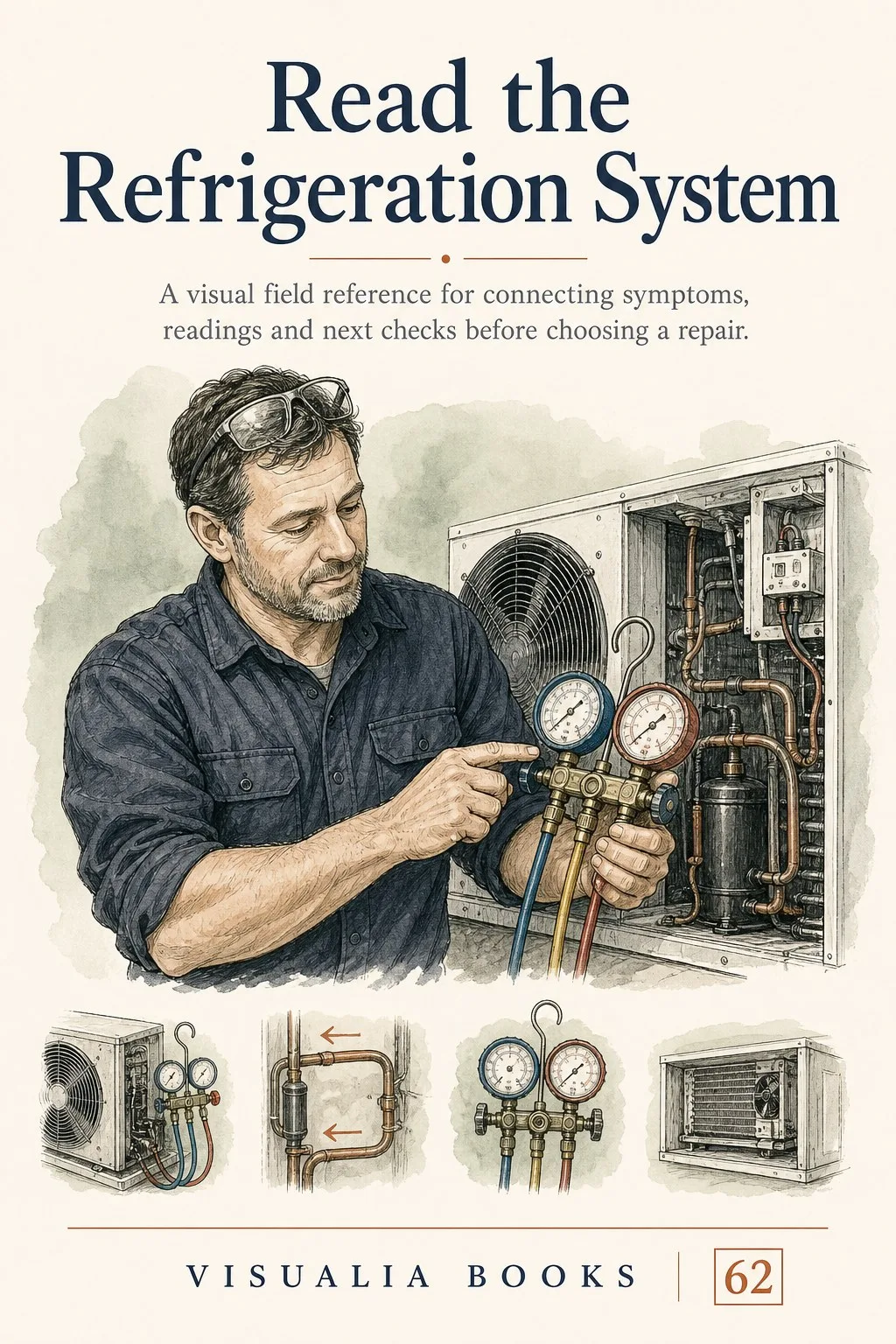
Read the symptoms. Check the evidence. Choose the next step. A field reference for the moment before a repair decision

Connect circuit drawings, measurement locations and operating conditions on conventional air-cooled DX service calls. 62 illustrated pages.

Illustrated PDF reference for trained commercial refrigeration technicians

BUY NOW

🔒 Secure checkout · PDF by email · 30-day guarantee

66 pages62 illustrated reference sheets plus front matter
9 partscircuit concepts, readings, symptoms and service records
2 companionsevidence sheets and readings reference included
PDFconsult on your device or print for your service kit

This Is What the Pages You Will Study Look Like

Preview seven selected reference sheets below. Check the scope, drawings and level of detail before buying.

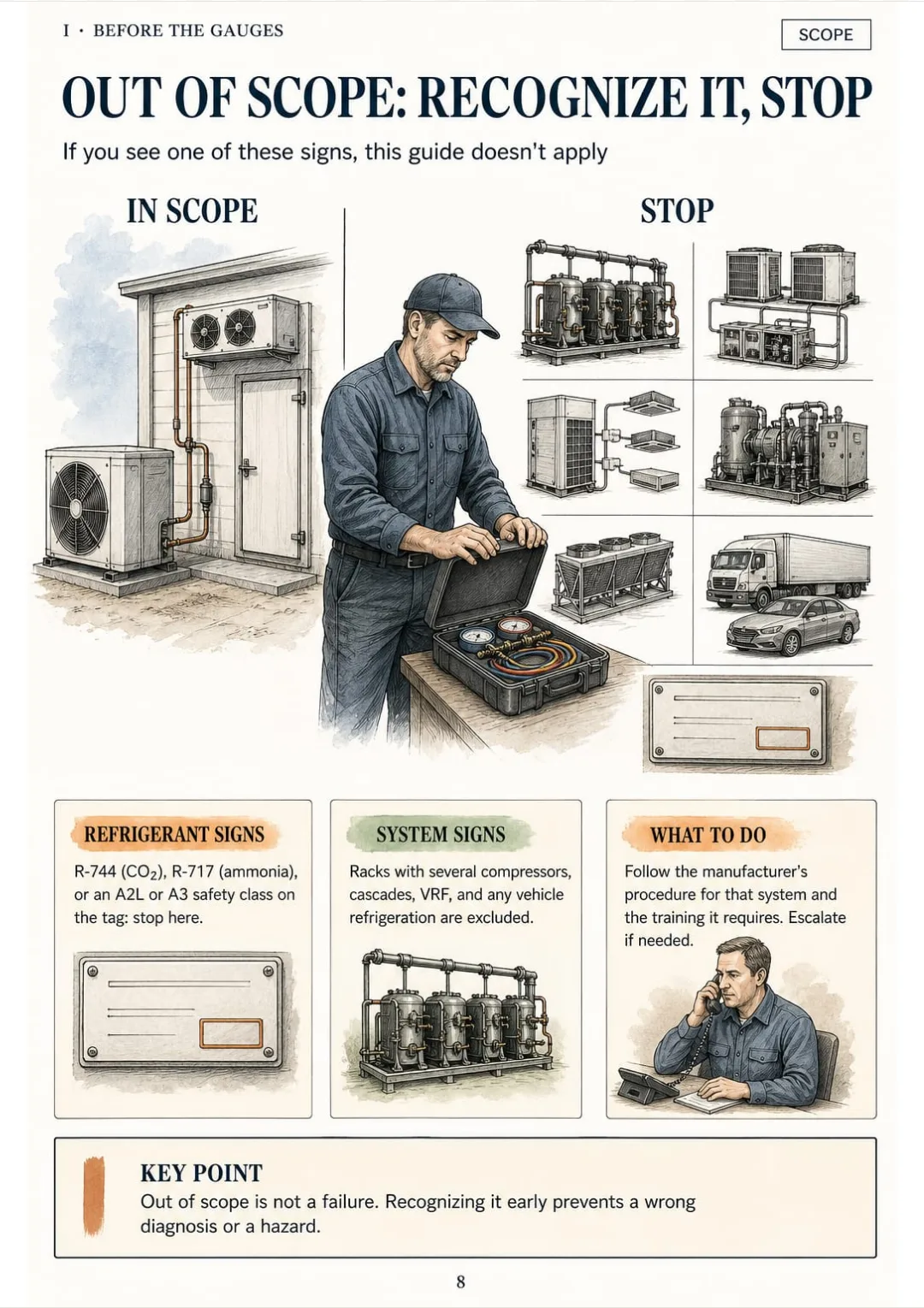
Identify conventional air-cooled DX systems and recognize equipment outside this guide.
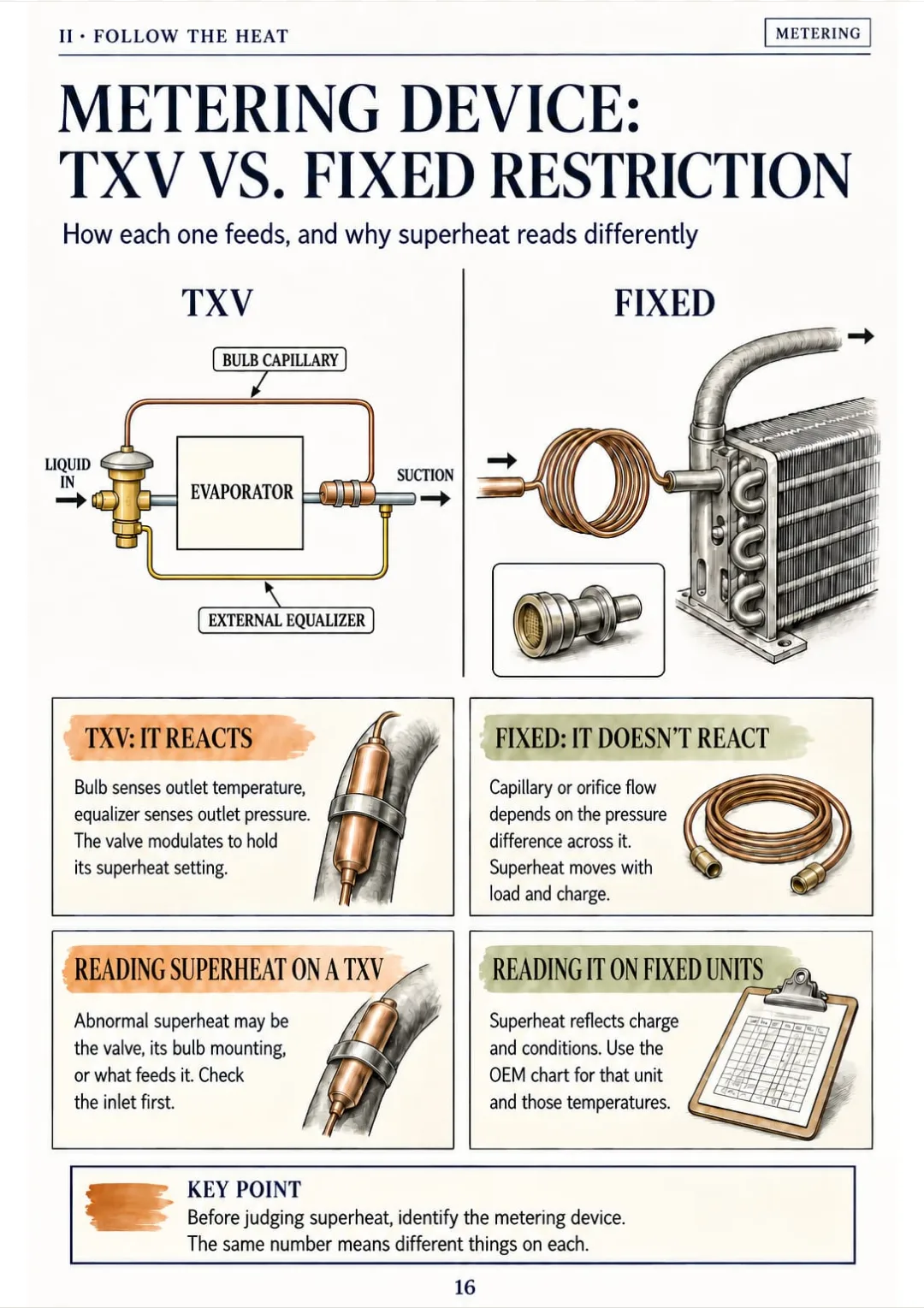
TXV and fixed restrictions: relate the device to the measurement location.
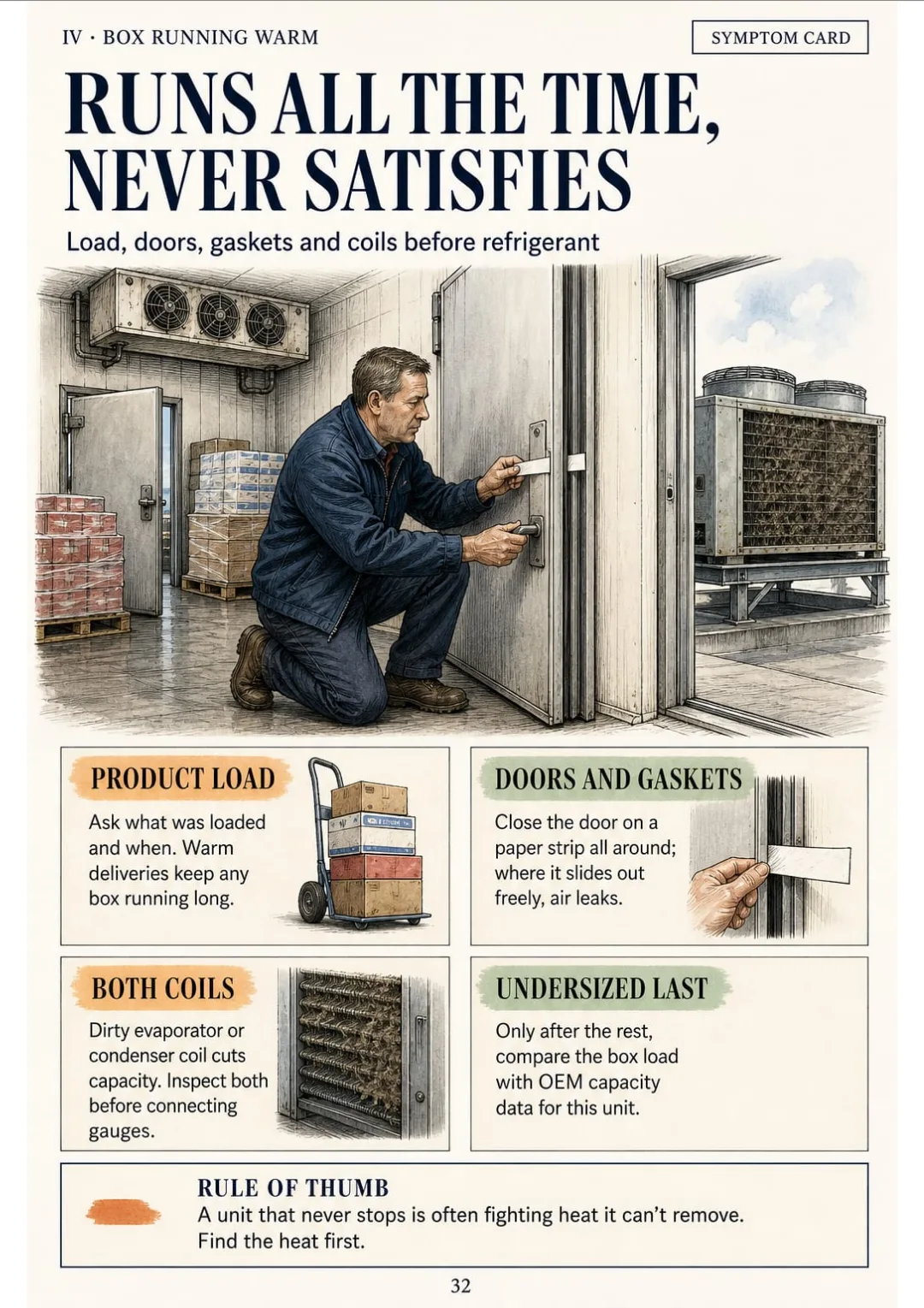
Relate load, doors, airflow and operating conditions before assessing capacity.
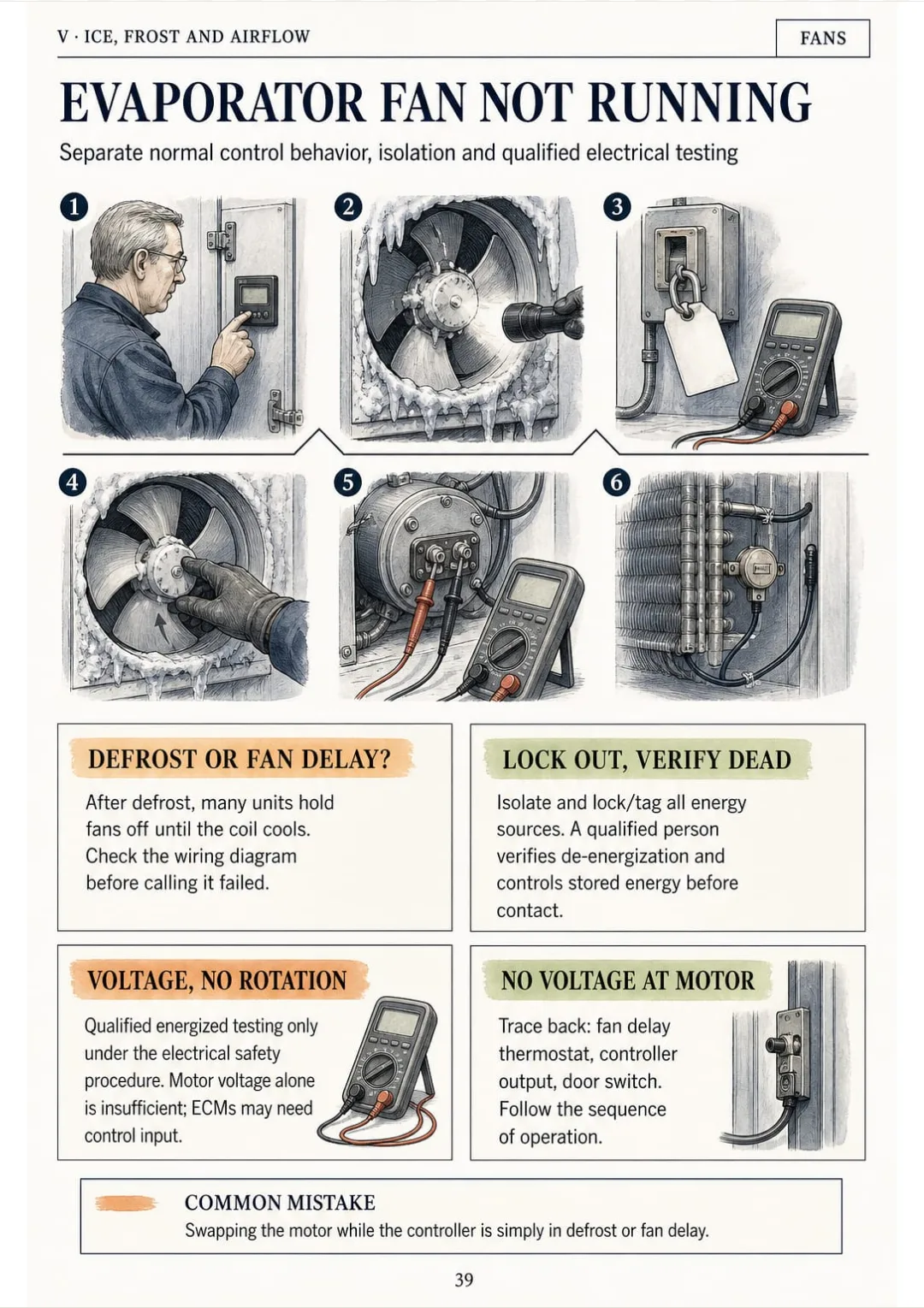
Separate fan sequence checks from qualified electrical tests using the equipment procedure.
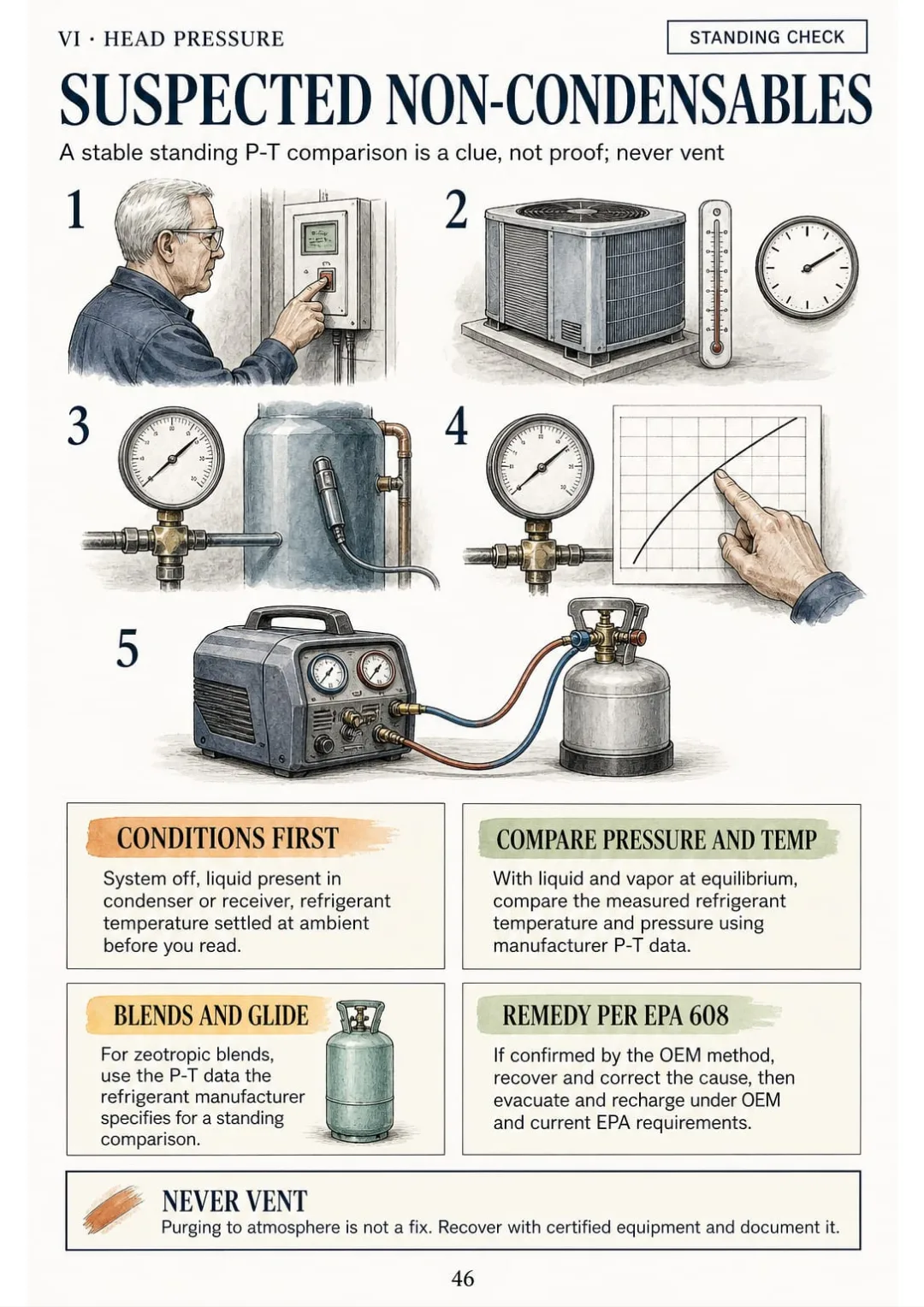
Interpret stabilized pressure-temperature evidence with refrigerant and system configuration identified.
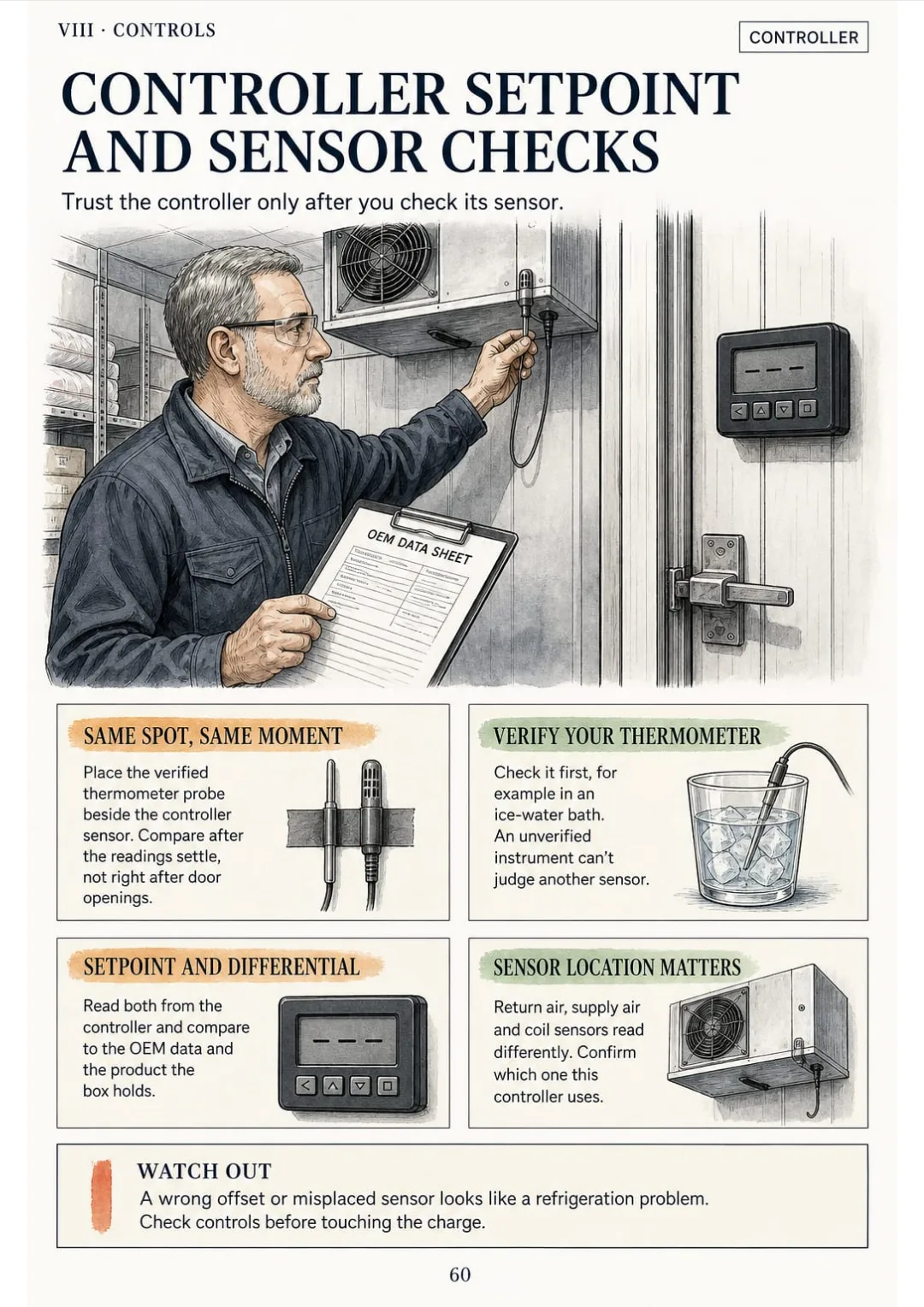
Compare sensors with a verified instrument in the same location and check OEM settings.
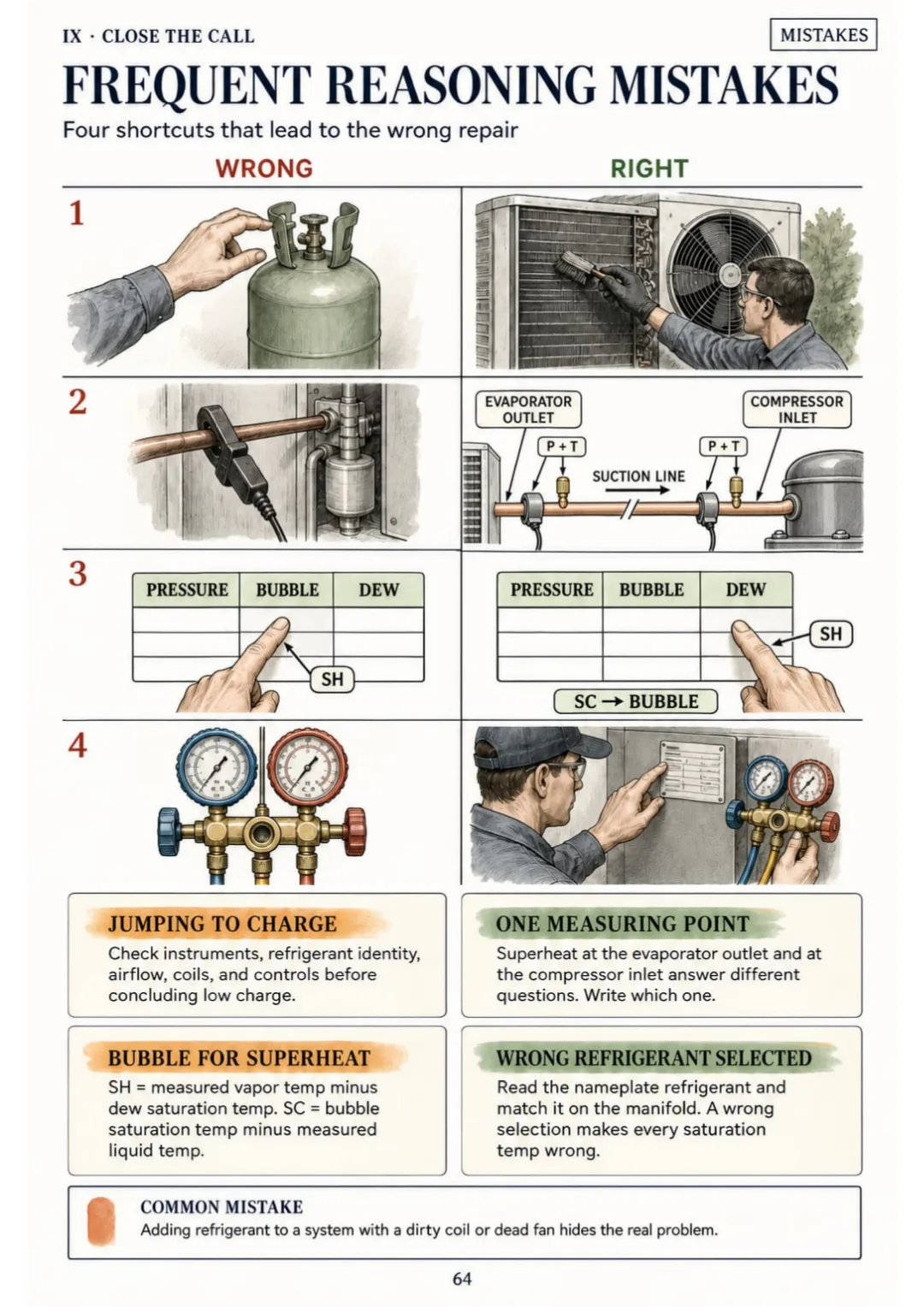
Check instruments, measurement locations and refrigerant selection before drawing conclusions.

Swipe to see more · tap to zoom →

These are real pages from the book. The table of contents is the full one: 9 parts and 62 topics.

A warm box and a low suction reading still leave several possibilities.

Imagine a reach-in running warm. Low suction could fit reduced airflow, an iced coil, a restriction or low charge. The reading needs context before it supports a repair.

The useful question is what evidence is missing: the operating state, a paired temperature reading, the coil condition or the manufacturer's procedure.

Check instruments, measurement locations and refrigerant selection before drawing conclusions.

The Frequent Reasoning Mistakes sample connects four checks: avoid jumping to charge, record measurement locations, use dew for superheat and select the correct refrigerant.

Keep the reasoning visible while you gather the evidence.

Unnecessary parts or refrigerant

A repair based on incomplete evidence can add cost without correcting the cause.

Repeated checks and return visits

Missing conditions or measurement locations make it harder to compare readings and verify a change.

A decision you need to explain

A clear service record helps you show what was measured, what it supported and what still needs checking.

BUY NOW

🔒 Secure checkout · PDF by email · 30-day guarantee

SEE THE DIFFERENCE

Turn a technical concept into a check you can locate

THIS
  • Find a general explanation without checking which system it applies to.
  • Remember a pressure value without its refrigerant, location or conditions.
  • Treat a clue as confirmation before checking the OEM method.
A standing pressure-temperature comparison can support a non-condensables investigation only under suitable conditions. Liquid and vapor must be present at equilibrium, the refrigerant must be identified, and the actual refrigerant temperature and appropriate manufacturer P-T data must be used. Ambient temperature alone is not a substitute for these checks. The comparison is a clue, not a conclusive test for every system or blend. Confirm using the OEM method; any recovery or recharging follows the applicable service procedure and current refrigerant-management rules. Never vent.
FOR THIS
  • Locate the relevant component and measurement points.
  • Read the conditions and limitations alongside the check.
  • Use the findings to choose an OEM-supported next step.
Interpret stabilized pressure-temperature evidence with refrigerant and system configuration identified.
CONTENTS

Take a Look at the 9 Parts and 62 Topics

Nine sections organize the reference: identify the equipment, understand the circuit, interpret readings, investigate symptoms and record the result.

IBefore You Touch the Gauges · pp. 5-11
  1. How to work a call with this book
  2. Identify the system first
  3. Reading the nameplate and data tag
  4. Out of scope: recognize it and stop
  5. Write down the conditions before the readings
  6. Ask what changed
  7. Where the OEM data goes on every sheet
IIFollow the Heat · pp. 12-19
  1. Follow the heat through the circuit
  2. The compressor: what goes in, what comes out
  3. Air-cooled condenser: three zones
  4. The liquid line: drier, sight glass, solenoid
  5. Metering device: TXV vs. fixed restriction
  6. The evaporator: boiling and the superheat zone
  7. Suction line: evaporator outlet vs. compressor inlet
  8. The measurement points map
IIIReadings, Not Guesses · pp. 20-27
  1. One reading is not a diagnosis
  2. Pressure and saturation temperature pairs
  3. Bubble point, dew point and glide
  4. Superheat: local vs. total
  5. Total superheat at the compressor
  6. Subcooling with the right saturation temp
  7. Why this book gives no universal normals
  8. Air temperature split, read with conditions
IVBox Running Warm · pp. 28-35
  1. Warm box, compressor running, suction low
  2. Warm box, suction high
  3. Warm box, compressor not running
  4. Compressor short cycling
  5. Runs all the time, never satisfies
  6. Readings look fine, box still warm
  7. Warm product, air temp reads OK
  8. Reach-in, walk-in and display case
VIce, Frost and Airflow · pp. 36-42
  1. Ice on the coil: defrost or operating conditions?
  2. Frost on only part of the evaporator
  3. Frost back to the compressor
  4. Evaporator fan not running
  5. Dirty or blocked evaporator coil
  6. Defrost won't start or won't end
  7. Ice in the drain pan, water on the floor
VIHead Pressure and the Condenser · pp. 43-49
  1. High head pressure on a hot afternoon
  2. Dirty condenser coil
  3. Condenser fan and recirculation
  4. Suspected non-condensables
  5. Low head pressure in cold weather
  6. Overcharge or airflow problem?
  7. High discharge temperature
VIICharge, Restrictions and Metering · pp. 50-57
  1. Before you say 'low charge'
  2. Bubbles in the sight glass
  3. Restriction at the filter drier
  4. TXV hunting
  5. TXV starving or overfeeding
  6. Capillary tube and fixed-orifice units
  7. Liquid line solenoid not opening
  8. Suspected leak: confirm and document
VIIIControls and Safeties · pp. 58-61
  1. Reading the sequence of operation
  2. Pressure controls: why you never jump them
  3. Controller setpoint and sensor checks
  4. Compressor won't start
IXClose the Call · pp. 62-66
  1. Record and verify before you leave
  2. What to tell the customer
  3. Frequent reasoning mistakes
  4. When to stop and escalate
  5. Symptom index at a glance

See the component, the check and the conditions together

Some sheets explain the circuit; others cover a symptom or a measurement. Drawings and short notes help you locate the check and remember what must be verified before interpreting it.

Separate fan sequence checks from qualified electrical tests using the equipment procedure.

The evaporator-fan sample separates normal defrost or fan-delay behavior from a possible fault. It distinguishes safe isolation from energized electrical testing, which requires qualified personnel and the electrical safety procedure.

The drawing is a reminder; the equipment procedure governs the work.

BUY NOW

🔒 Secure checkout · PDF by email · 30-day guarantee

Here Is What You Get with Read the Refrigeration System:

Ipp. 5-11

Before You Touch the Gauges

Before You Touch the Gauges: identify the system, read the nameplate, write down conditions, recognize out-of-scope units and stop.

IIpp. 12-19

Follow the Heat

Follow the Heat: trace the circuit from compressor to suction line — condenser zones, liquid line components, metering device, evaporator and measurement points drawn.

IIIpp. 20-27

Readings, Not Guesses

Readings, Not Guesses: pressure-temperature pairs, bubble vs. dew, local vs. total superheat, subcooling, and why this book gives no universal normals.

IVpp. 28-35

Box Running Warm

Box Running Warm: low or high suction, compressor off, short cycling, continuous running, warm product and the differences between reach-ins, walk-ins and display cases.

Vpp. 36-42

Ice, Frost and Airflow

Ice, Frost and Airflow: ice on the coil, partial frost, frost back to the compressor, fan checks, dirty coils, defrost failures and drain problems.

VIpp. 43-49

Head Pressure and the Condenser

Head Pressure and the Condenser: high head on a hot day, dirty condenser, fan and recirculation, non-condensables, low head in cold weather, overcharge vs. airflow and high discharge temp.

VIIpp. 50-57

Charge, Restrictions and Metering

Charge, Restrictions and Metering: sight glass bubbles, filter drier restriction, TXV hunting and starving, cap tubes, solenoid faults and suspected leaks.

VIIIpp. 58-61

Controls and Safeties

Controls and Safeties: sequence of operation, pressure controls you never jump, controller sensors and compressor no-start checks.

IXpp. 62-66

Close the Call

Close the Call: record and verify, what to tell the customer, frequent reasoning mistakes, when to escalate and a symptom index.
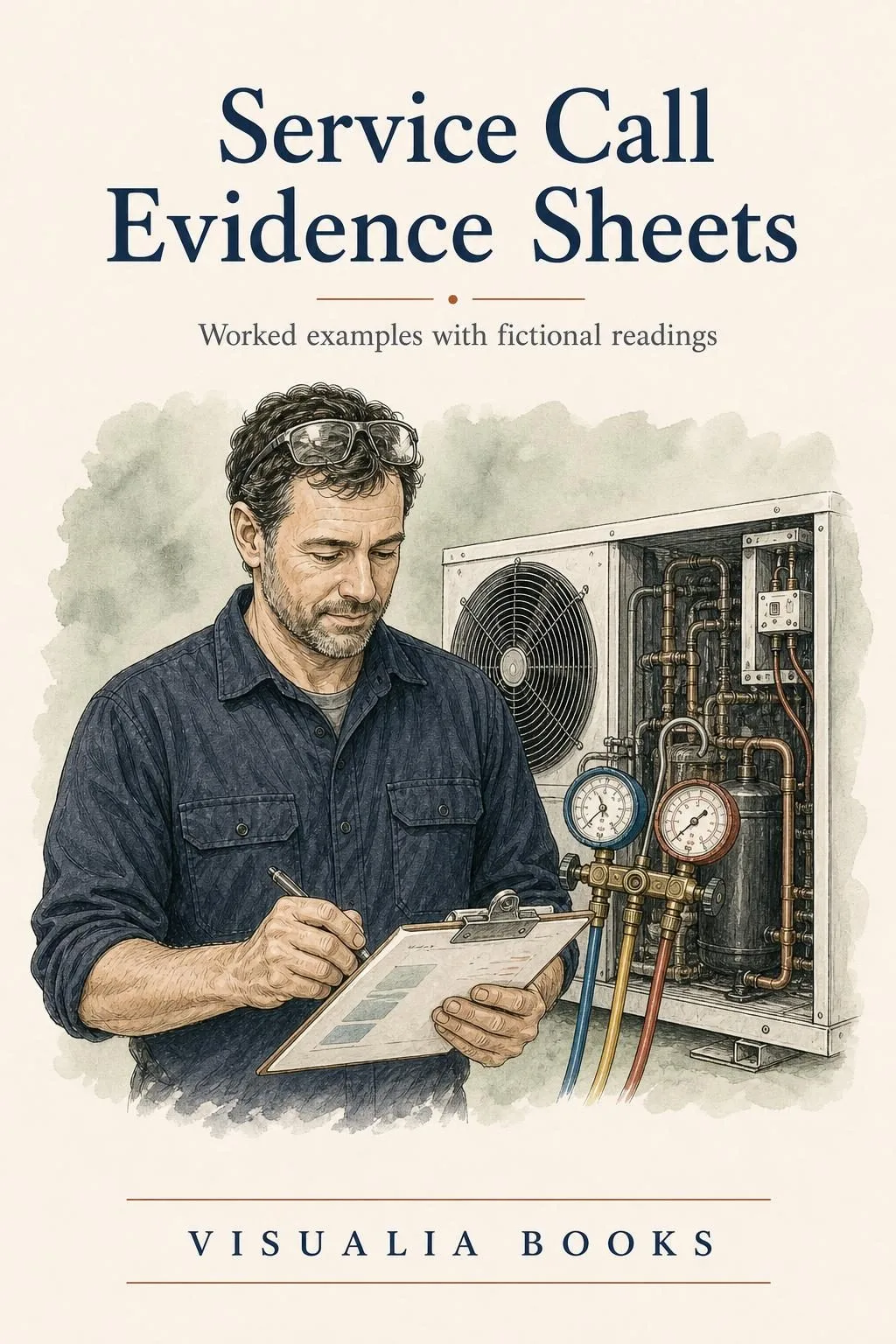
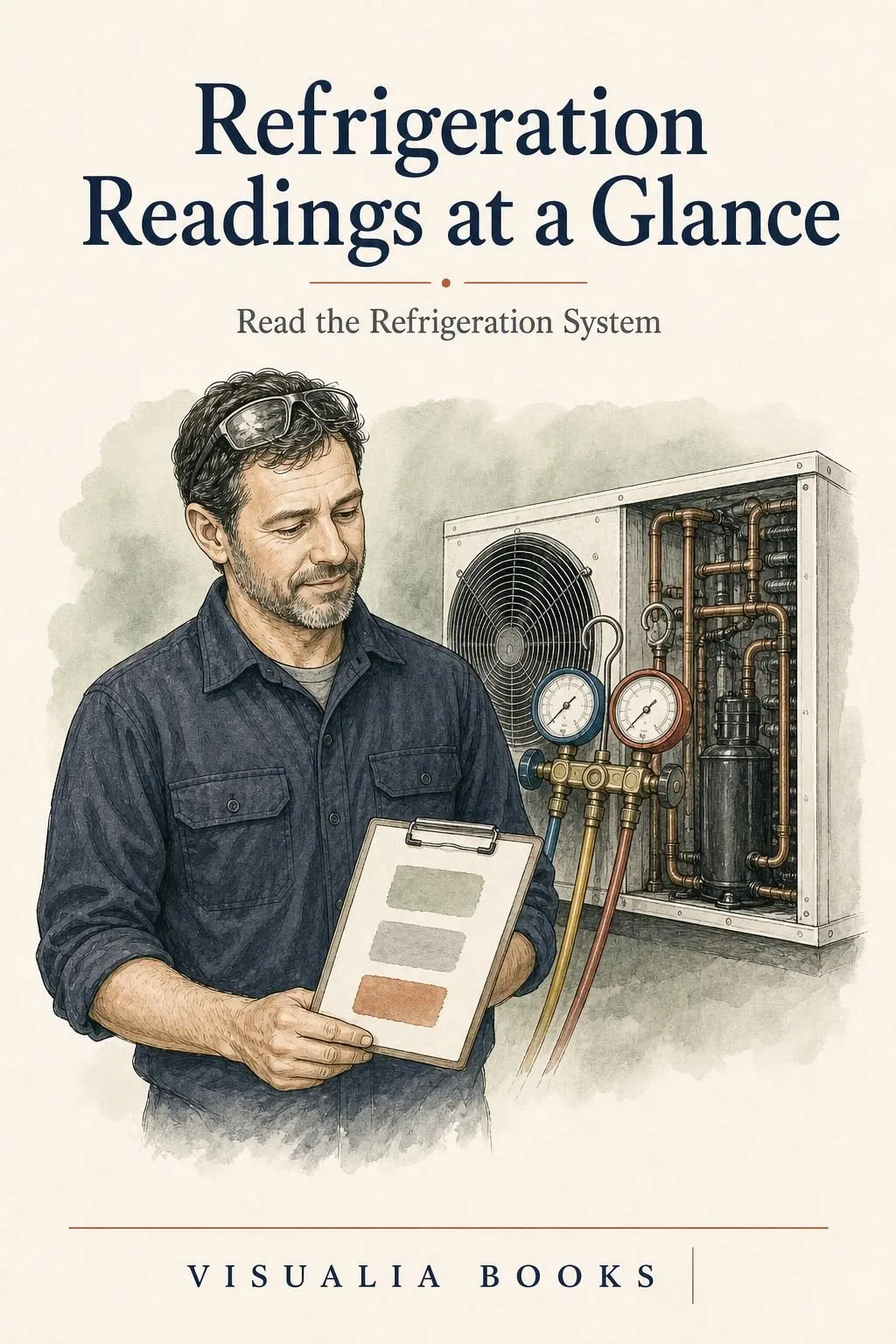
And That Is Not All: 2 More Books, Free

Service Call Evidence Sheets

BONUS 1: «Service Call Evidence Sheets»

Worked examples with fictional readings and blank evidence sheets to practice recording conditions, measurements, decisions and verification.

Refrigeration Readings at a Glance

BONUS 2: «Refrigeration Readings at a Glance»

Review the formulas, measurement points and most frequent reading mistakes on quick reference cards you can pull up on your phone between calls.

Read the Refrigeration System + 2 Free Books

  • Read the Refrigeration System: 62 illustrated pages
  • BONUS 1: Service Call Evidence Sheets
  • BONUS 2: Refrigeration Readings at a Glance
  • High-resolution PDF to printIncluded
YOUR PRICE:
US$ 29.90
BUY NOW

📄 This is a digital PDF book sent to your email: nothing is printed or shipped.

Secure purchaseEncrypted payment30-day guarantee

PDF by email: Read the Refrigeration System reaches your inbox as a PDF, and the two free books come by email too. One-time payment, no installments or hidden costs.

Built for these service situations

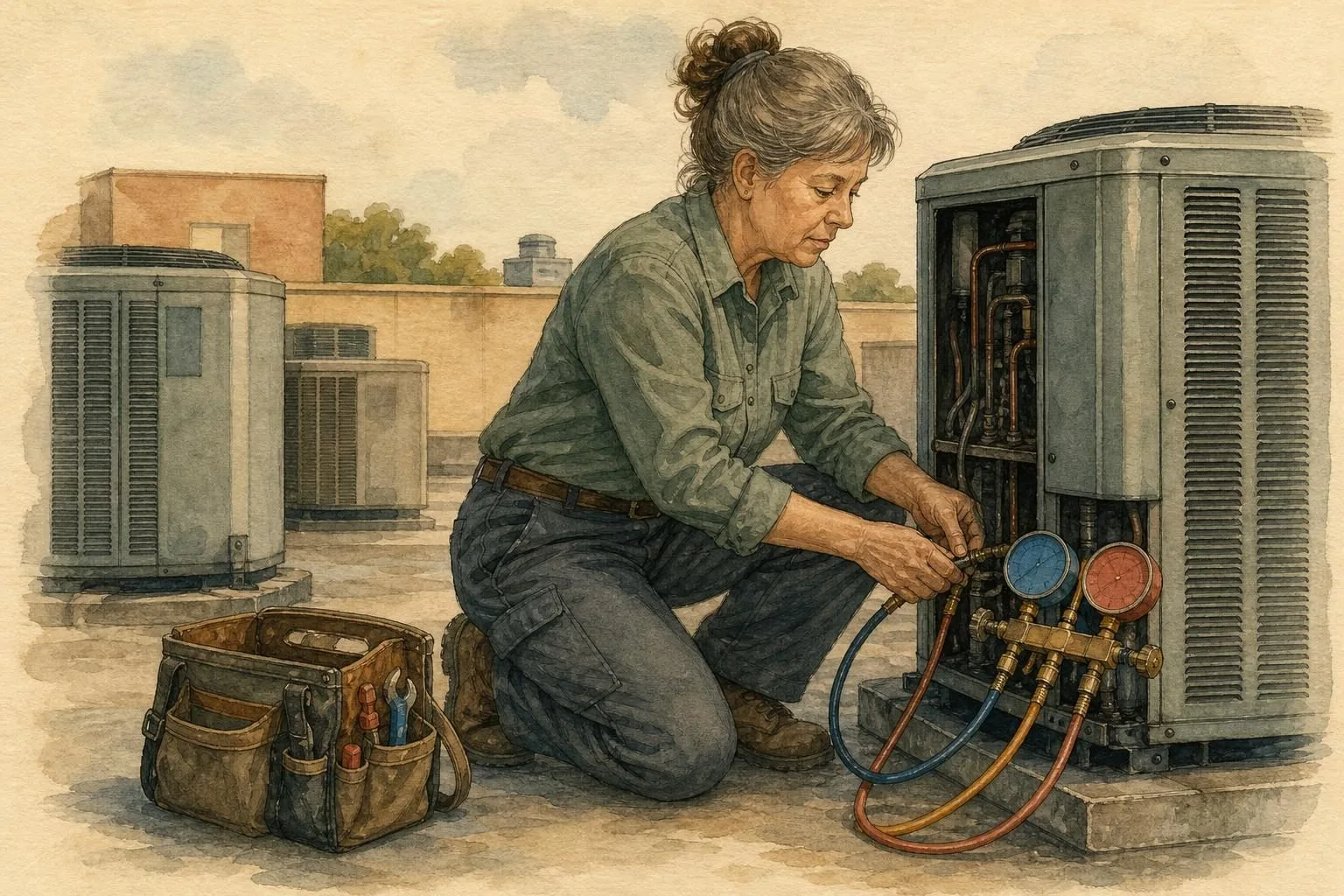
Trained technician working on commercial DX units

Trained technician working on commercial DX units

Use a compact reference to connect the symptom, conditions and next check on equipment within the stated scope.

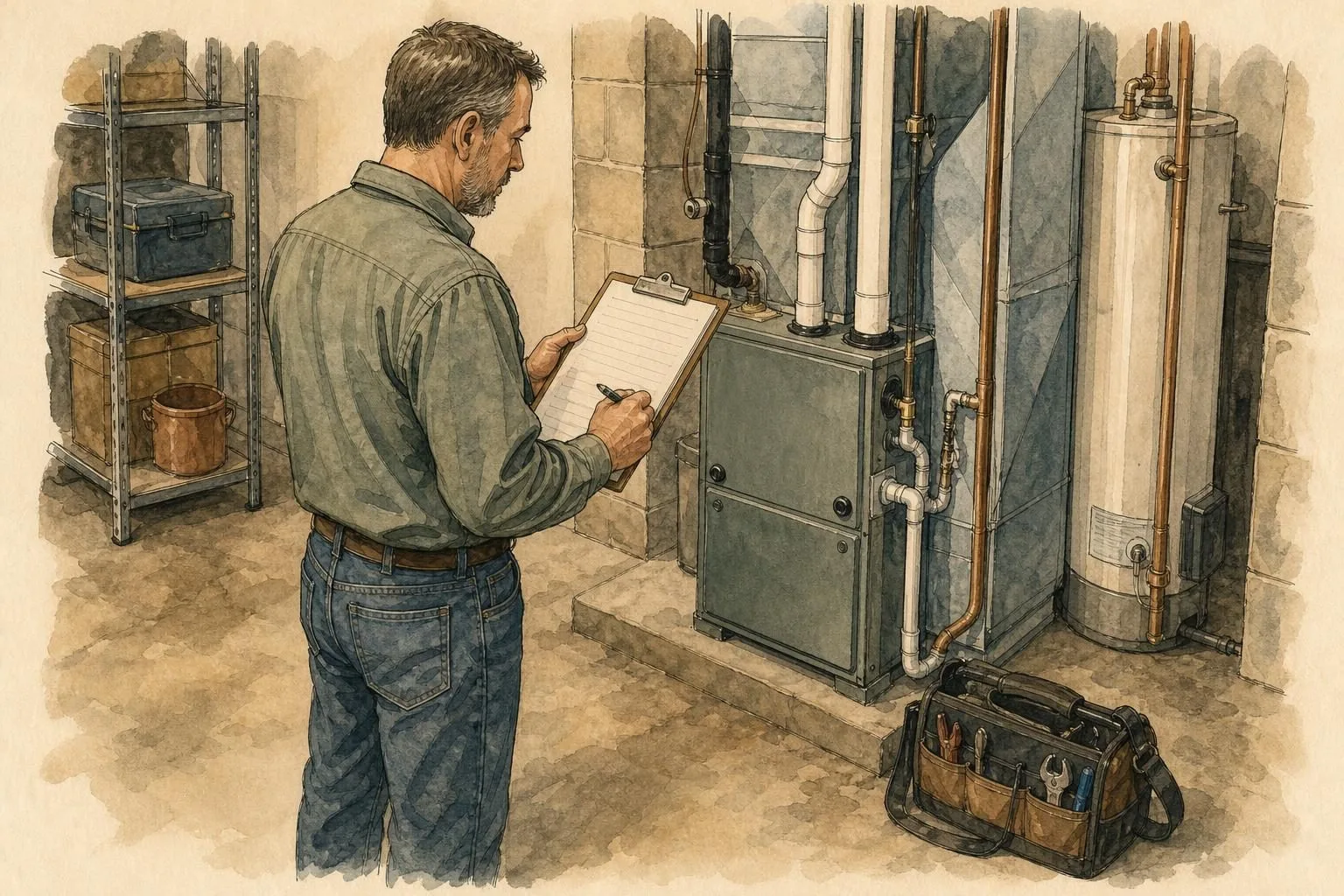
Experienced technician documenting the reasoning

Experienced technician documenting the reasoning

Record where readings came from and why they support a decision, especially when the symptoms overlap.

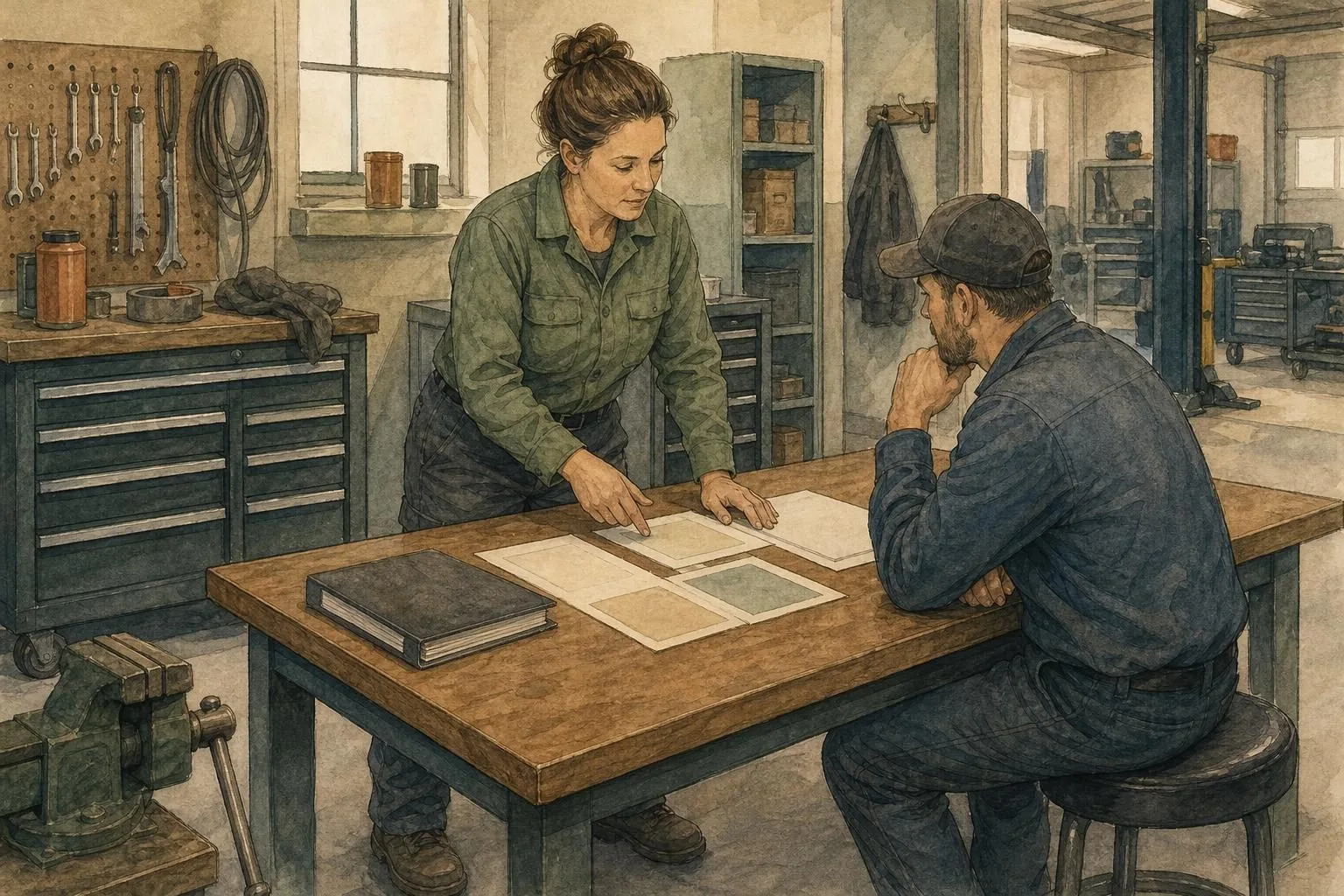
Service manager supporting trained technicians

Service manager supporting trained technicians

Use the illustrated concepts and evidence sheets to discuss a call and review its documented findings.

To Sum Up: Here Is What You Get

US$ 29.90
BUY NOW

📄 This is a digital PDF book sent to your email: nothing is printed or shipped.

30DAYS
GUARANTEE

30-Day Guarantee

30-day guarantee: tell us what didn't work and we'll refund 100%.

30-day money-back guarantee. If the reference does not meet your needs, tell us what did not work for you and request a full refund.

Frequently Asked Questions

Is this a physical book or a digital file?

It's a digital PDF. You receive it by email and can read it on any device or print it for your truck.

Can I read it on my phone?

You can open the PDF on your phone and zoom in on drawings or notes. Preview the sample sheets to judge readability on your screen.

Where does the PDF go after I pay?

To the email you type at checkout. You get Read the Refrigeration System plus Service Call Evidence Sheets and Refrigeration Readings at a Glance, all as PDF by email.

Is this an EPA 608 prep course?

No. This is a field reference for techs who already work on commercial refrigeration. It doesn't prepare you for the EPA 608 exam and doesn't replace any required certification.

Does it cover CO2, ammonia, VRF or racks?

It covers conventional air-cooled DX commercial refrigeration. A2L/A3 refrigerants, CO2, ammonia, VRF, racks, cascades and automotive systems are outside scope. The scope-check sample explains when to use specialist procedures instead.

Will it give me universal normal pressures or superheat targets?

No. Appropriate pressures, superheat, subcooling and charging methods depend on the equipment, refrigerant and conditions. Use the applicable manufacturer documentation.

I've been in the trade for twenty years. Is this too basic?

It is a reference for trained technicians, combining circuit reminders, measurement locations and symptom checks. The seven samples show the depth and presentation so you can judge the fit.

Is this a one-time payment?

Yes. One payment, no subscription, nothing recurring.

Does it replace hands-on training or OEM service manuals?

No. It's a field reference that helps you organize checks and readings. It doesn't replace your training, your certifications or the OEM documentation for the specific unit you're servicing.

Does the main guide require an extra purchase to be useful?

No. Essential instrument, refrigerant, airflow, coil and control checks are in the main guide. Optional add-ons provide more examples and reusable sheets.

One Last Thing Before You Decide...

Find the symptom or concept you need.

Locate the check and record the conditions.

Use the evidence and OEM procedure to choose what follows.

Review the seven sample sheets, then decide whether this belongs in your service kit.

One-time payment: US$ 29.90 · Guarantee: 30 days · PDF by email

BUY NOW

📄 This is a digital PDF book sent to your email: nothing is printed or shipped.